
Once the world economy starts growing commodity prices will likely rise again so investing in a commodity-based mutual fund may not be a bad time to invest some of your money.
'Deposit and lending rates have started to fall considerably. It is likely to spur investment and consumption of durables.'

Brent crude oil prices can touch $150 a barrel (bbl) - up a whopping 103 per cent from the current levels - in the worst-case scenario if the Israel-Iran geopolitical tensions escalate, suggest analysts.

Hardening prices of manufactured items during the month may refrain the Reserve Bank of India from cutting rates in its policy review on February 8.

Larsen & Toubro's (L&T) Q1FY26 revenue and net profit came in slightly ahead of estimates. There was strong core engineering and construction (E&C) order inflows at Rs 76,600 crore, with order wins in energy and infrastructure in domestic and international markets.

S&P Global Ratings on Wednesday cut India's growth projection for the current fiscal to 7.3 per cent from 7.8 per cent earlier on rising inflation and the longer-than-expected Russia-Ukraine conflict. In its Global Macro Update to Growth Forecasts, S&P said inflation remaining higher for long is a worry, which requires central banks to raise rates more than what is currently priced in, risking a harder landing, including a larger hit to output and employment. S&P had in December last year pegged India's GDP growth in the 2022-23 fiscal, which began on April 1, 2022, at 7.8 per cent.

Fast-moving consumer goods (FMCG) companies are expected to witness pressure on volumes in the October-December quarter. However, price hikes will help push up revenues, said brokerages.For India's largest engineering firm, Larsen and Toubro (L&T), the analysts expect a 20 per cent growth in consolidated revenue, and an 8.1 per cent core business Ebitda margin, up 40 bps from a year ago.

Gold prices inched closer to the psychological mark of Rs 1 lakh per 10 grams as the bullion rates surged Rs 1,650 in the national capital on Monday on weak dollar and uncertainties over US-China trade war driving demand. According to the All India Sarafa Association, the yellow metal of 99.9 per cent purity reached Rs 99,800 per 10 grams on Monday. Its value had declined Rs 20 to close at Rs 98,150 on Friday.

The re-opening of the Chinese economy, as it moves away from its zero-Covid policy, could help stabilise commodity prices, according to some of the country's top metal companies. They view this as a positive for demand, at a time when markets such as the US and Europe have been largely weighed down by slowdown concern now. "Most of us in the metals business are hoping the Chinese economy picks up because half of any metal demand, including demand for aluminium, comes from China.

The stock of commercial vehicle (CV) company Ashok Leyland is up 46 per cent in the past three months, gaining despite worries about a slowdown in sales volume. Brokerages have a mixed view on the country's second-largest medium and heavy commercial vehicle manufacturer. The company reported steady March quarter results and its valuation, focus on growth and medium-term prospects are positive, but some brokerages are cautious, given near-term demand concerns and the risk of competition increasing in the industry.

Hit by inflation, higher input costs and pricing measures, fast-moving consumer goods companies are expected to see a contraction in their gross margin and a modest-to-flat operating profit in the October-December quarter. Several FMCG makers are likely to log a low single-digit rise in their revenue, returning to the cycle of value-driven growth.
Among agriculture commodities, cash crops like cotton and castor are now emerging as asset classes.

Retail inflation dipped marginally to a nearly six-year low of 3.34 per cent in March due to a decline in prices of vegetables and protein-rich items. The Consumer Price Index (CPI) based inflation was 3.61 per cent in February and 4.85 per cent in March last year.

Gold future prices sustained upward trend for the fourth straight session by surging Rs 2,048 to hit a fresh record high of Rs 100,000 per 10 grams as investors rushed to safe havens after US President Donald Trump indicated plans to overhaul Federal Reserve amid continuing global trade war jitters. On the Multi Commodity Exchange (MCX), the August delivery contract of the yellow metal bounced by Rs 2,048 or 2.1 per cent to hit a fresh peak of Rs 100,000 per 10 grams in the mid-session trade.

Maruti Suzuki India will increase the prices of its vehicles 'substantially' from next month as it looks to offset the impact of rising input costs and make provisions to update the model range to conform to stricter emission norms which kick in from April 2023. In a regulatory filing on Friday, the country's largest carmaker said it continues to witness increased cost pressure driven by overall inflation and recent regulatory requirements. While the automaker makes maximum effort to reduce cost and partially offset the increase, it has become imperative to pass on some of the impact through a price increase, it added.

India's overall retail inflation eased to 4.41 per cent in September, helped by falling commodity prices, but rural inflation was at 5.05 per cent

The Reserve Bank on Wednesday hiked key benchmark policy rate by 25 basis points to 6.5 per cent, citing sticky core inflation.

Domestic rating agency Icra on Monday revised its FY24 GDP growth forecast to 6.5 per cent from 6.2 per cent earlier. However, the revised forecast is still much lower than the Reserve Bank of India's (RBI's) 7 per cent real Gross Domestic Product (GDP) growth estimate for the ongoing fiscal. Earlier this month, the RBI had revised upwards its GDP estimate to 7 per cent from 6.5 per cent, calling the revised number a "conservative" one.

After consumer price index jumped the 6.3-per cent mark in May and wholesale inflation set a record of 12.94 per cent, house economists at Swiss brokerage UBS Securities have warned that the country is facing more upside risks on the inflation front that is set to averaging at 5 per cent for the year. Rising prices of edible oils and protein rich items pushed retail inflation to a six-month high of 6.3 per cent in May, breaching the comfort level of the Reserve Bank and thus rendering reduction in interest rates a difficult proposition in the near term. Led by petrol price, that has crossed the Rs 100-mark in many states, wholesale inflation too accelerated to a record 12.94 per cent in May. While crude oil has crossed $70 a barrel on account of rising prices of crude oil and manufactured goods due to spike in commodities, and the low base of last year due to the lockdown.

Leading FMCG companies reported a decline in margins in the September quarter on account of higher input costs and food inflation, which ultimately slowed down the pace of urban consumption. Rising prices of commodity inputs such as palm oil, coffee and cocoa were also accentuated and some FMCG firms have hinted at a price hike. HUL, Godrej Consumer Products Ltd (GCPL), Marico, ITC, and Tata Consumer Products Ltd (TCPL) have expressed concerns over squeezing urban consumption, which according to industry experts forms 65-68 per cent of FMCG total sales.
Global food prices are rising and are likely to touch an all-time high in 2013 due to drought in some parts of the world, according to a report.

'My advice: Don't mark your portfolio to market every day. Focus on survival.'

The wholesale price-based inflation eased for the eighth consecutive month to 4.73 per cent in January on easing prices of manufactured items, fuel and power. The wholesale price-index (WPI) based inflation rate was 4.95 per cent in December 2022 and 13.68 per cent in January 2022. Inflation in food articles, however, rose to 2.38 per cent in January, from (-) 1.25 per cent in December, 2022.

'While investing in a silver ETF, one should be aware that it has historically exhibited higher price volatility than gold.'

Bajaj Auto - the country's most valuable two-wheeler (2W) company by market capitalisation - met Street expectations in the January-March quarter (Q4) of 2024-25 (FY25) but still ended Friday as the worst performer on the Nifty 50, slipping 3.1 per cent.

Carmakers Mercedes-Benz, Audi, Renault, Kia India and MG Motor on Wednesday announced plans to hike vehicle prices from January to partially offset the impact of rising input costs. They join the likes of market leader Maruti Suzuki India and Tata Motors, which have also made the year-end announcements to raise prices from next month. Audi India said it will increase prices of its entire model range by up to 1.7 per cent, while Mercedes-Benz India noted it will hike the prices by up to 5 per cent from January 1.

As we say shalom to 2016, the key drivers for the markets in the year ahead have become more obvious, says Neeraj Gambhir, managing director and head of fixed income, India, Nomura. First, there is a surging dollar. Second, rising commodity prices. Then, we have the effects of demonetisation.

IndusInd Bank was the top loser in the Sensex pack, shedding over 3 per cent, followed by HUL, ONGC, ICICI Bank, Axis Bank, Kotak Bank, M&M and Tech Mahindra. NSE Nifty tumbled 154.25 points to 14,696.50.

Indian industry will have to deal with high raw material prices, and user industries will see their costs rising though with a lag in some cases.

Retail inflation rose to three-month high of 4.81 per cent in June, mainly on account of hardening prices of food, according to the government data. Inflation based on the Consumer Price Index (CPI) stood at 4.31 per per (revised upward from 4.25 per cent) in May and 7 per cent in June 2022. The inflation, however, remains within the RBI's comfort level of below 6 per cent.
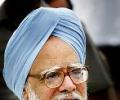
Amid concerns over price rise, Prime Minister Manmohan Singh on Wednesday said inflation will come down to 6.5 per cent by March-end if the international oil prices soften and commodity prices do not rise further.
Our economic climate since the spring of 2007, when foodgrain prices started their journey northwards, has created an imbalance in market power between buyers and sellers, to the great disadvantage of the former.

Indian economy is projected to grow 7.1-7.6 per cent in the current financial year despite shifting geopolitical realities across the world, a report said on Wednesday. In its India's economic outlook - July 2022 report, leading consultancy Deloitte India said that as 2021 was coming to a close, there was optimism in the air but the optimism received a jolt early this year as a wave of Omicron infections swept through the country and Russia's invasion of Ukraine happened in February. "These events aggravated the pre-existing challenges such as surging inflation, supply shortages, and shifting geopolitical realities across the world with no definite end in sight.

Hindustan Unilever's Q3FY24 performance was lacklustre, with both sales and operating profit barely moving from the year-ago period due to price cuts and higher advertising costs. Besides weak demand, the FMCG (fast-moving consumer goods) major is facing increased competitive pressures, particularly from regional players, which, coupled with a slow recovery in rural markets, could put revenues under pressure going forward. Margins are expected to remain range-bound as benefits from falling raw material costs are expected to be neutralised by rising promotional budgets.

The country's largest carmaker Maruti Suzuki India (MSI) on Monday said it has increased prices of its entire product range, except Celerio, by up to 1.9 per cent with immediate effect. In a regulatory filing, the company noted that it has taken the decision to hike prices due to an increase in various input costs. The weighted average price rise in ex-showroom prices (New Delhi) across select models is 1.9 per cent, it added. This is MSI's third price hike this year.
High domestic food prices are still a cause for concern despite India hugely benefiting from a slump in global oil and commodity prices that pushed inflation into negative zone, the Economic Survey said.
Gold prices rallied by Rs 630 to a lifetime high of Rs 82,700 per 10 grams in the national capital on Wednesday following persistent buying by jewellers and retailers amid strong global trends, according to the All India Sarafa Association. Rallying for the sixth straight session, gold of 99.5 per cent purity appreciated by Rs 630 to hit a lifetime high of Rs 82,330 per 10 grams.

Merchandise exports to the US jumped 23.5 per cent year-on-year (Y-o-Y) to $8.3 billion in June, even as India's overall outbound shipments witnessed contraction during the month, according to the data released by the commerce department on Tuesday. The increase in outbound shipments to the US was largely driven by the rush among exporters to utilise America's pause on its plans to impose country-specific reciprocal tariffs.

With India making it clear that the US doesn't have enough spare capacity for crude oil, Washington, DC, now wants India to sign fixed-term liquefied natural gas (LNG) contracts with American producers, multiple sources in the know said.

The Indian equity market valuation has been moving in tandem with the US 10-year treasury yield. While the benchmark US bond yield has witnessed a nearly 70 basis point decline since the end of October this year, dropping from 4.93 per cent to 4.23 per cent on Friday, the Sensex earnings yield has slipped by nearly 45 basis points - from 4.5 per cent to 4.05 per cent. Previously, Indian equities' earnings yields rose in sync with the US bond yields.
